 guide
GUIDE
A First Visit to Georgetown: Streets, Canal and Waterfront
Choose a compact route through the commercial streets, canal and waterfront instead of treating Georgetown as a single stop.
CAPITAL REGION · COMMUNITY
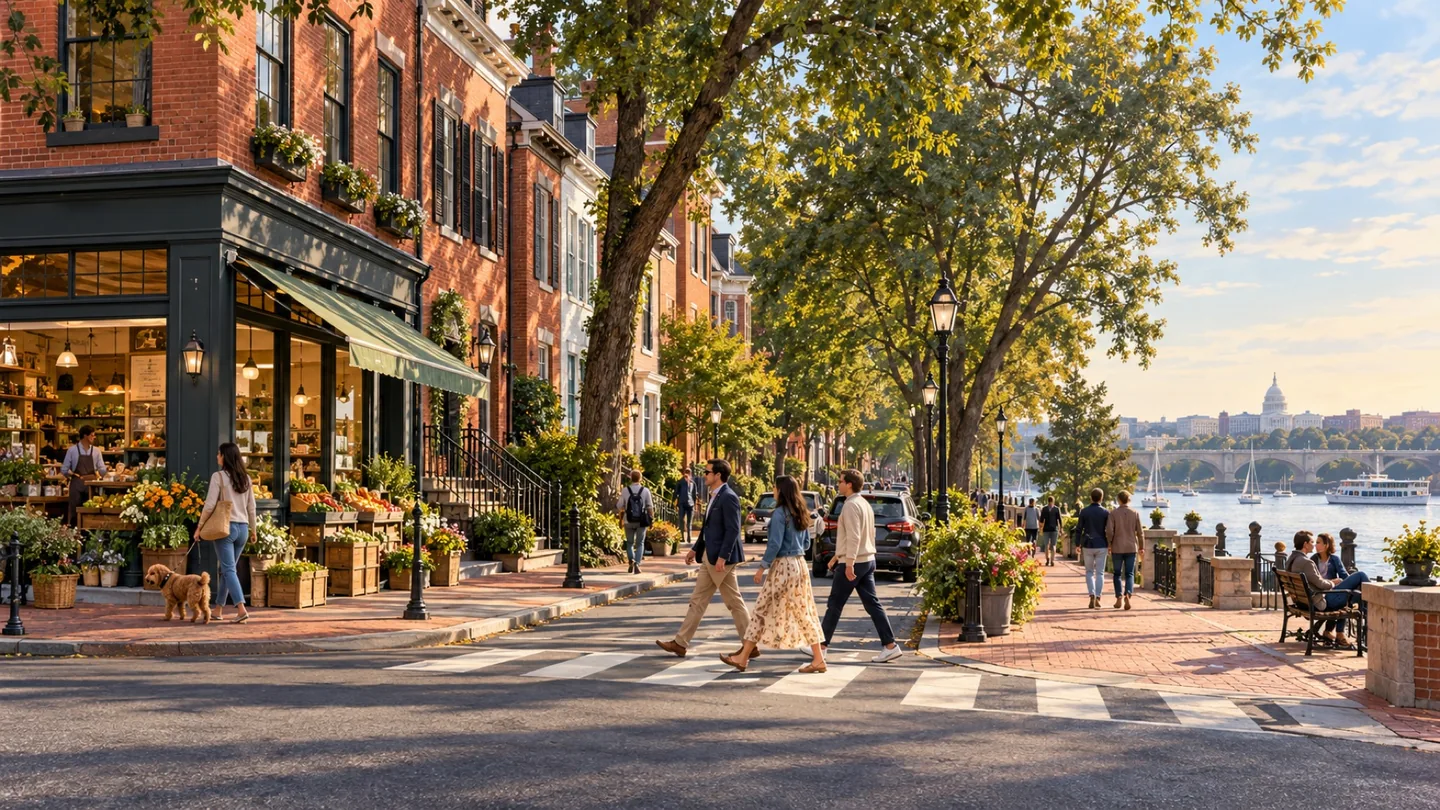
Georgetown offers several distinct visits within the same DC neighborhood. M Street and Wisconsin Avenue provide the main shopping crossroads; Book Hill adds galleries, antiques and independent boutiques farther up Wisconsin Avenue; and the Potomac waterfront offers park paths and river views. Cady's Alley provides another focus for design and home furnishings. Choose the experience that interests you before choosing an arrival point. Moving between these areas involves different streets and surfaces, and a waterfront visit is not the same journey as an afternoon around Book Hill.
Georgetown offers several distinct visits within the same DC neighborhood. M Street and Wisconsin Avenue provide the main shopping crossroads; Book Hill adds galleries, antiques and independent boutiques farther up Wisconsin Avenue; and the Potomac waterfront offers park paths and river views. Cady's Alley provides another focus for design and home furnishings. Choose the experience that interests you before choosing an arrival point. Moving between these areas involves different streets and surfaces, and a waterfront visit is not the same journey as an afternoon around Book Hill.
The river and canal help explain Georgetown's commercial and industrial past. The National Park Service's waterfront interpretation identifies former mills and industrial complexes and points visitors toward the beginning of the Chesapeake and Ohio Canal near Thompson Boat Center. Georgetown Waterfront Park follows the Potomac between 31st Street NW and Key Bridge. These are related places, but the riverfront park and canal towpath are different routes. Use the park for a river-focused outing and consult current National Park Service information before planning a canal walk. Historic scenery should not be taken as evidence that every path or facility is open.
Book Hill occupies the Wisconsin Avenue stretch from O Street to Reservoir Road, with a concentration of galleries, antique shops, boutiques and cafés. It makes a useful alternative focus for visitors interested in browsing smaller destinations, with Book Hill Park and the Georgetown library adding nearby points of interest. Cady's Alley offers a different setting: design and furnishing businesses occupy adapted industrial buildings around an alley with cobblestone paving. Decide whether the day is about art, home design, general shopping or the river, then connect the relevant stops. This produces a more satisfying visit than treating every Georgetown destination as interchangeable.
For a home or workspace, start with the practical condition and rules of the particular property. Ask about interior access, deliveries, storage, maintenance and any shared responsibilities. Then confirm whether planned work requires historic review and which agency process applies. The appearance of a similar building does not establish what is permitted at the one you are considering. Use the address rather than the general Georgetown label when asking questions. This guide provides orientation; it does not establish a property’s value, lease terms, school assignment, development rights or the likely outcome of an application.
Georgetown has no Metro station within the neighborhood. Foggy Bottom–GWU and Rosslyn are nearby rail options, but each leaves a journey to the actual destination; Rosslyn connects across Key Bridge. Compare the complete route before selecting a station, especially for a visit that begins at Book Hill or involves luggage, purchases or mobility needs. Use current operator information for any bus connection. Some older visitor pages still contain outdated transit directions. Drivers should confirm the destination's entrance and parking arrangements, while walkers should check current canal detours instead of assuming the towpath provides an uninterrupted shortcut between stops.
Check the specific place you plan to visit as well as the broader neighborhood. The National Park Service reports canal repair work and Georgetown towpath detours, so use its current notices and follow posted routes. At Old Stone House, current visitor information describes limited interior access rather than access to every floor. If a particular gallery, studio or historic interior is the purpose of the outing, confirm its opening details directly. For a home or business project, Georgetown's local and federal preservation-review context makes the exact address and proposed work important; consult the District's Old Georgetown Review resources before assuming an alteration is straightforward.
Georgetown's commercial areas offer useful distinctions for planning a visit. M Street and Wisconsin Avenue form the central shopping crossroads, Book Hill provides a concentration of galleries and smaller shops, and Cady's Alley focuses attention on design and furnishings. Start with the kind of business you need, then locate the actual entrance. An address on a main street may lead into an alley or a building with a separate approach. For a prospective tenant, compare customer access, deliveries and the physical requirements of the space. Check preservation and property requirements for planned changes rather than assuming that a neighboring business establishes what will work at another address.
SCHOOLS + STUDENT LIFE
A neighborhood name does not prove a school assignment, voting district, ward, precinct, tax parcel or service boundary. Use the exact address in the current official lookup and confirm unusual cases with the responsible agency.
The school system and enrolled school make individual assignment, enrollment, transfer and athletic-eligibility decisions.
CIVIC + EVERYDAY SERVICES
Ward, ANC, school boundary and public-space questions can follow different maps. Check the exact address and current school year before making a household decision.
Jurisdiction resources checked 2026-11-10. Recheck changing boundaries, officeholders, meeting dates and registration inventory at the official source.
USE THIS AREA WELL
Georgetown is a historic neighborhood, university area, commercial district, waterfront and canal community with no Metrorail station inside its core. A useful guide must plan the final connection by bus, walking, biking, rideshare or parking and should not call the neighborhood Metro-adjacent without explanation. Hills, cobblestones, steps and seasonal crowding matter for accessibility and timing.
Coverage should separate M Street retail, Book Hill, the design district, university surroundings, waterfront and residential streets. Preservation review affects property and business changes, while federal and local agencies share roles along the canal and waterfront. Readers need official construction, lock, park and historic-district sources. Strong stories add Black history, architecture, independent businesses, river recreation and realistic visit planning beyond the familiar shopping strip.
BEFORE YOU CHOOSE
ONGOING COVERAGE
OFFICIAL STARTING POINTS
RELATED READING
guide
GUIDE
Choose a compact route through the commercial streets, canal and waterfront instead of treating Georgetown as a single stop.
 guide
GUIDE
A useful DC search starts with your week, then tests the addresses and services that would support it.