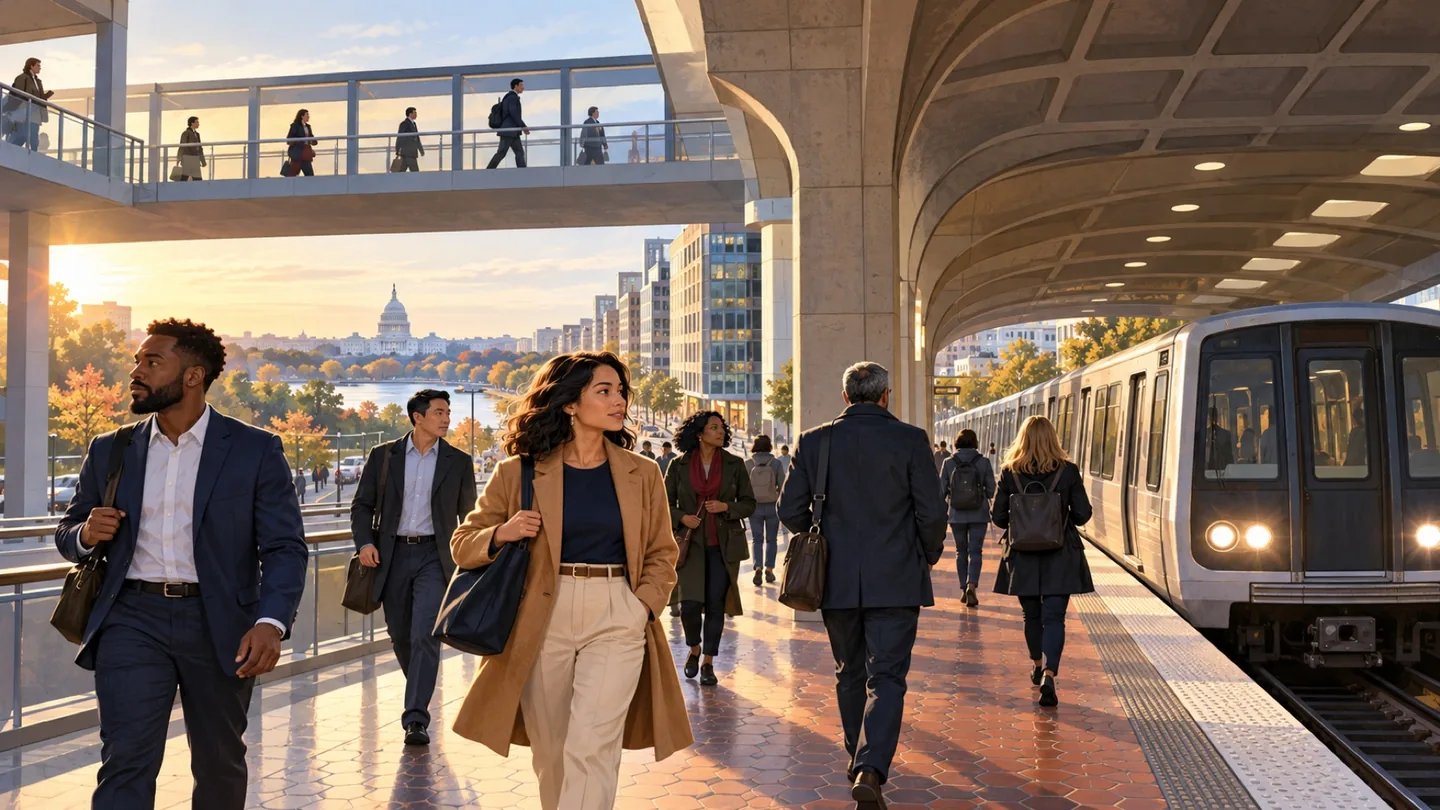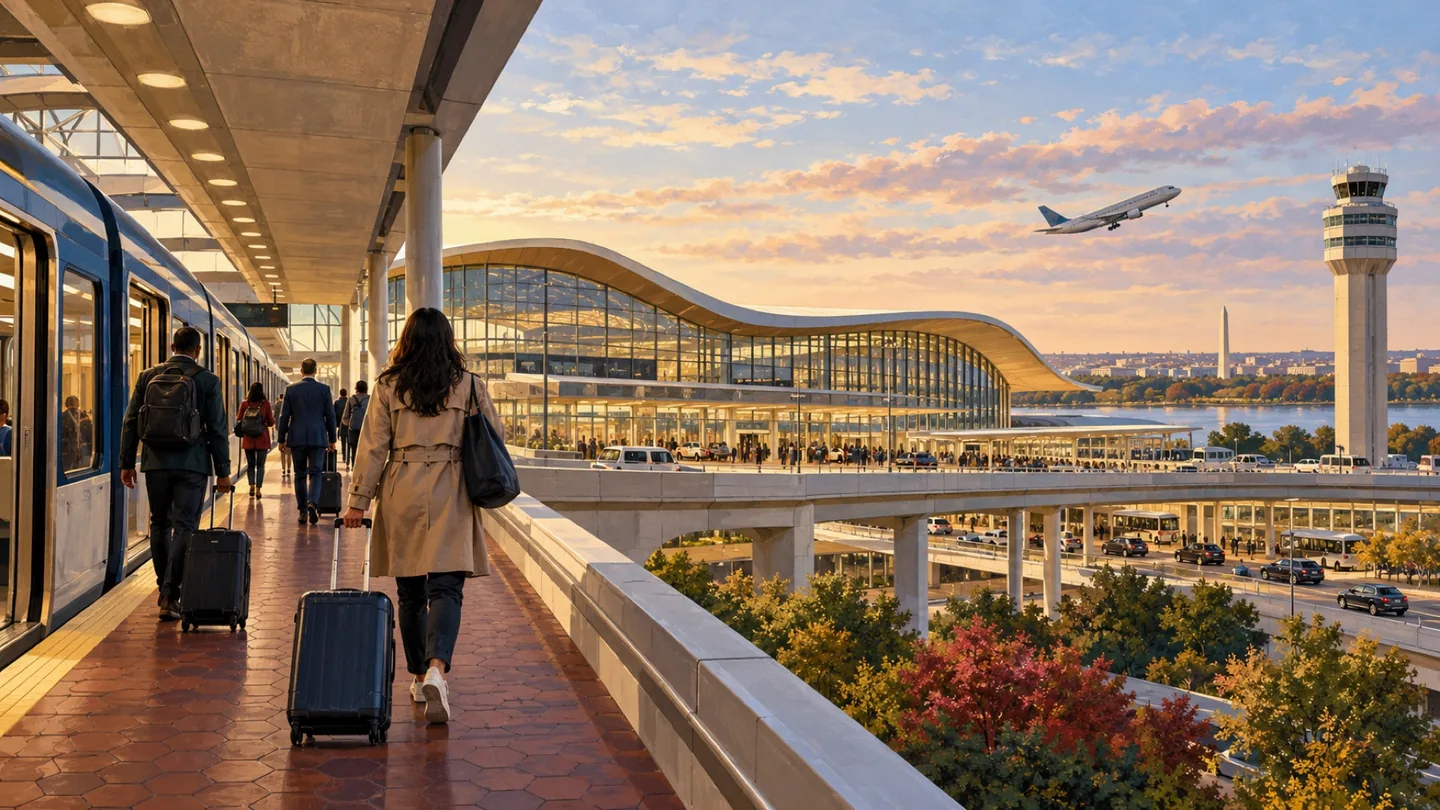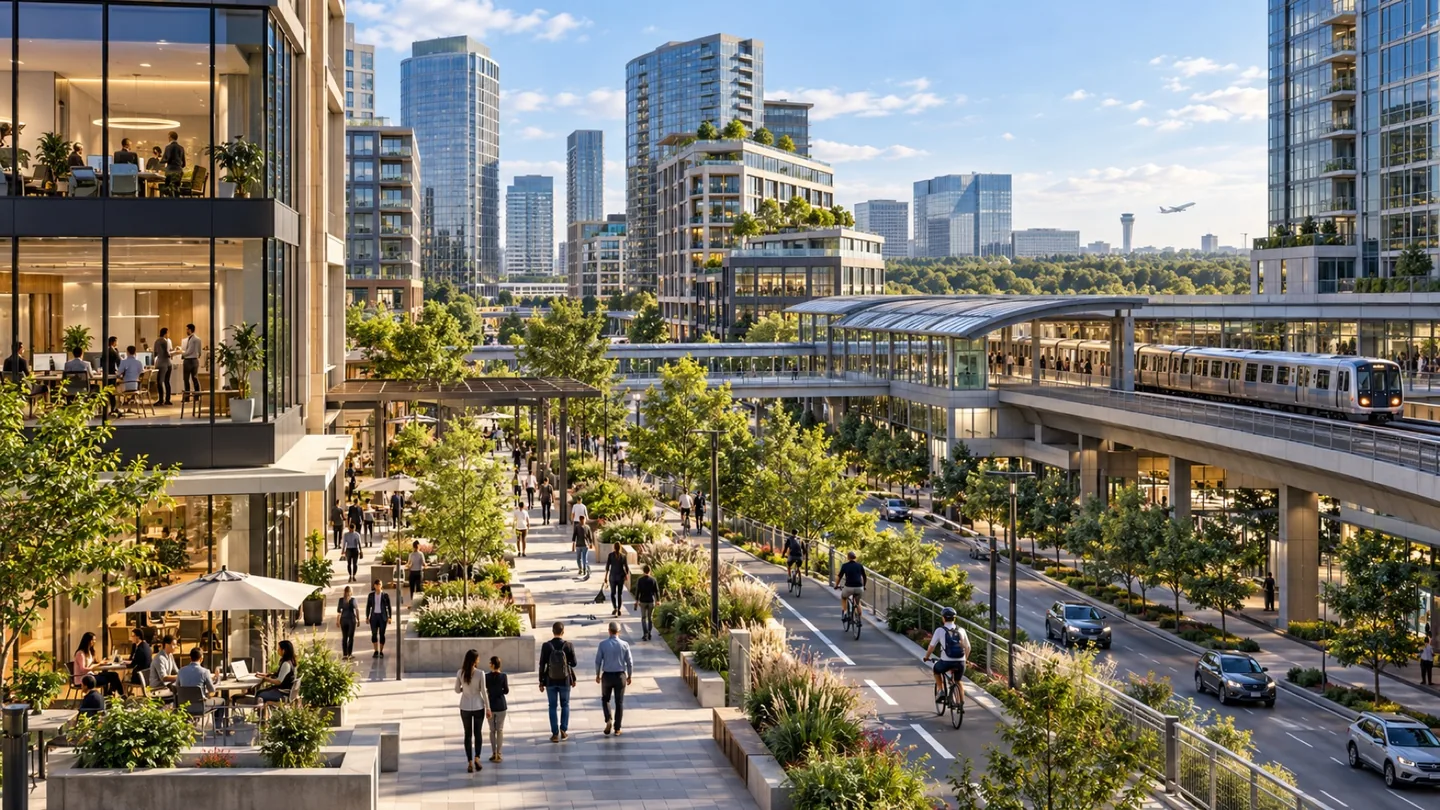
The Rosslyn–Ballston corridor is a useful introduction to Arlington because it lets you compare several station areas within one planning story. Arlington County identifies Rosslyn, Courthouse, Clarendon, Virginia Square and Ballston as the corridor's five Metro areas. They are parts of Arlington rather than separate incorporated cities. For a visitor, the corridor can support a focused day of exploration. For someone considering a home or business location, it offers a practical comparison: how would your daily routine work at one address versus another?
Understand the pattern before choosing a stop
The county's corridor history describes a planning approach that concentrates more intensive development around stations, then steps down toward surrounding residential areas. It also explains that each station area received its own plan. That is why one label for the whole corridor cannot replace a closer look at the individual blocks.
Use this pattern as a prompt for exploration. Start near a station, walk toward a destination that matters to you, and notice where the setting changes. Record the crossings, entrances and services along that route. The point is to understand a place in use, not to score it by the number of towers or storefronts you can see.
Rosslyn: plan the arrival carefully
Begin a Rosslyn visit with a precise meeting point. If you are visiting an office or staying at a hotel, obtain the correct lobby and visitor entrance before traveling. Trace the route from the station to that door. If you plan to continue elsewhere, save the return entrance as well. This is particularly useful when people in your group arrive by different modes and need one unambiguous place to meet.
For an outdoor stop, consult the county's Gateway Park page. It identifies the park on Langston Boulevard and links to project information. Review current access before building the day around it. A park can be both a useful destination and the subject of a redesign; an image of a proposed improvement is not confirmation that the feature is available.
Courthouse and Clarendon: test an ordinary errand
The county's historical planning account associates Courthouse with the government center and Clarendon with its urban-village approach. Those descriptions explain intent; they are not complete accounts of what every block feels like today. For a first look, pick a practical task near each stop: locating an appointment, meeting someone for lunch or checking a store you would use regularly.
Walk beyond the single storefront or building that brought you there. Can you combine the errand with another task without returning to your car? Where would you wait if you arrived early? How would someone unfamiliar with the area find you? Answering those questions gives the visit a purpose and prevents a housing search from becoming a series of disconnected property tours.
Include Virginia Square in the comparison
Virginia Square is part of the five-station corridor even when a short list jumps directly from Clarendon to Ballston. Include it in your orientation rather than treating the intervening area as empty space. Choose a specific destination and compare the actual approach from the station or another nearby stop.
Arlington's Central Library is at 1015 North Quincy Street. Its official page provides location and visitor information, while the library homepage carries service notices. The library offers a concrete civic destination to consider when assessing everyday life in the corridor. Check access and hours before visiting; do not use its parking as an assumed base for unrelated activities.
Ballston: look at the complete routine
At Ballston, build your comparison around the same questions used at the other stops. A place that works for a lunch meeting may not work equally well for a weekly grocery trip, early departure or late return. If considering a particular building, walk to the services you expect to use instead of relying on a broad claim that everything is nearby.
For a business location, think separately about staff, customers and deliveries. Ask the building manager how each enters and where each can stop. A client-facing office may need clear arrival instructions even when many employees use transit. A retail visit may depend on an entrance that differs from the one used for residential or office floors above it.
Build a half-day around two areas
Choose two station areas for a first outing and leave room to spend time in each. At the first, explore a practical route and stop for a meal or coffee according to your preferences. At the second, visit a public destination or investigate an errand. Use current transit information for the connection and keep the walk between stops optional.
Trying to inspect all five areas in one quick pass can produce a lot of movement and little understanding. If time is limited, write down what you want to learn before setting out. A question such as “Could I arrive at this office without a car?” is more useful than a vague goal of seeing the whole corridor.
Compare addresses with consistent questions
For each candidate home or workplace, record the door-to-station route, the essential errand, the evening return, guest access and a nearby place to take a break. Separate confirmed building features from questions that still need answers. If parking, storage, deliveries or pet arrangements matter, ask the owner or manager about the exact property.
Do not infer a school assignment, a travel time or a parking entitlement from an urban-village name. Those decisions require address-specific checks with the responsible organization. Likewise, treat future construction or proposed public space as context rather than a benefit you can use immediately. Keep those items in a separate column until their status is clear.
Use a second visit to challenge the first impression
Return at a different time if you are making a consequential location decision. Repeat the route that matters most and try one you skipped before. Notice how the plan works when you are carrying something, have a fixed appointment or need to meet a visitor. Record your own observations without turning them into universal claims about who belongs in an area.
The corridor's strength as a starting point is its variety within a connected framework. You do not need to choose a winner among Rosslyn, Courthouse, Clarendon, Virginia Square and Ballston. You need to find the routes, buildings and public spaces that fit the way you expect to spend an ordinary week.