 guide
GUIDE
National Mall and Monumental Core Visitor Guide
Give a few memorials your full attention and treat the distance between them as part of the visit.
CAPITAL REGION · COMMUNITY
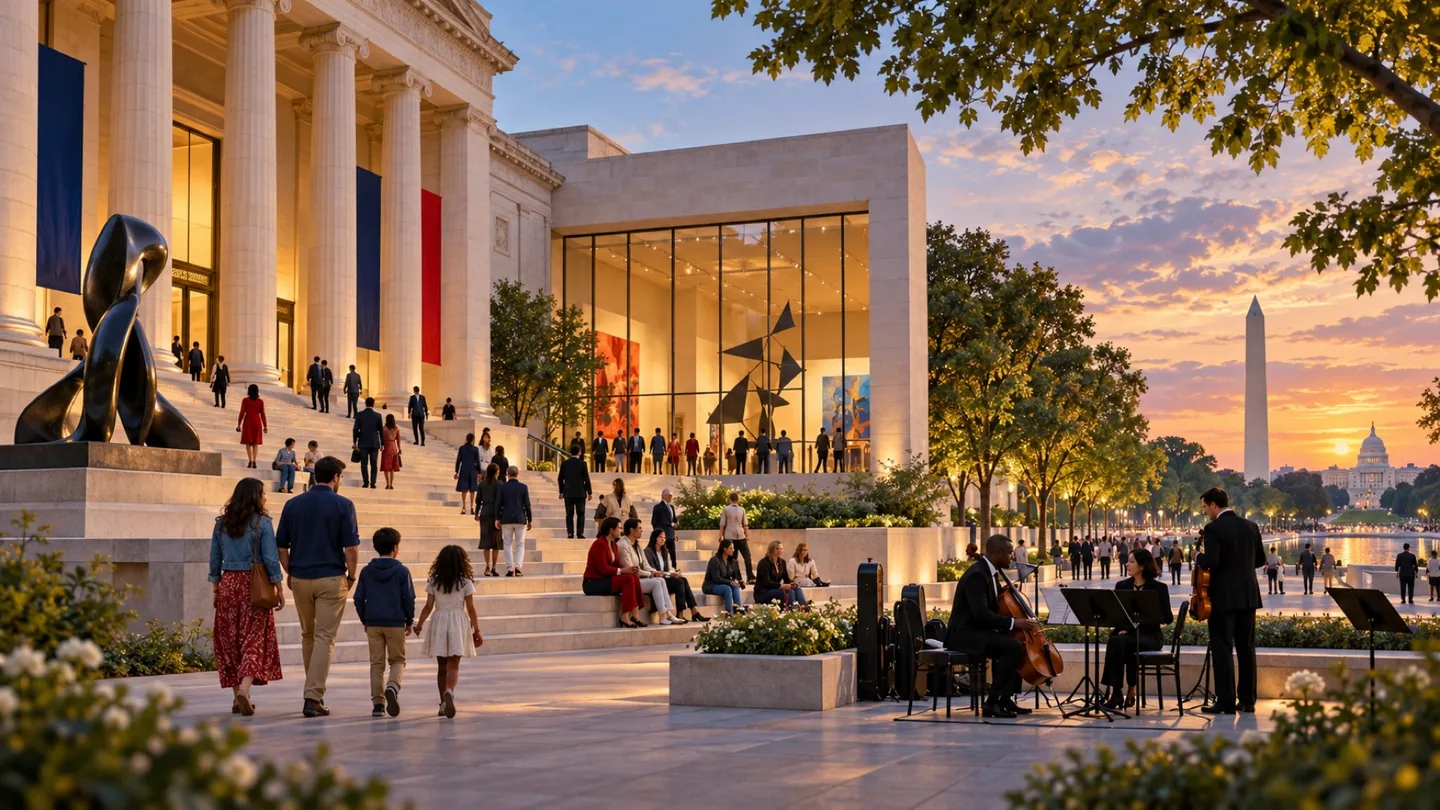
The National Mall and monumental core form a federal civic, museum and park landscape rather than a residential neighborhood. A useful guide must name the monument, museum, lawn, federal building or event zone, then verify the responsible agency, entrance, screening, closure and transportation plan.
The National Mall and monumental core form a federal civic, museum and park landscape rather than a residential neighborhood. A useful guide must name the monument, museum, lawn, federal building or event zone, then verify the responsible agency, entrance, screening, closure and transportation plan.
This page treats the National Mall as a visitor and civic area under multiple federal and District responsibilities. National Mall and Memorial Parks manages a broad portfolio of parkland and memorial sites, while Smithsonian museums, the U.S. Capitol, federal buildings, roads and transit have separate operators and rules. The historic Mall between the Capitol and Washington Monument is only part of the larger area commonly called the National Mall. The monumental core is an even broader planning concept. Coverage should use the exact destination and should never imply that one agency's hours, permits or security rules apply everywhere.
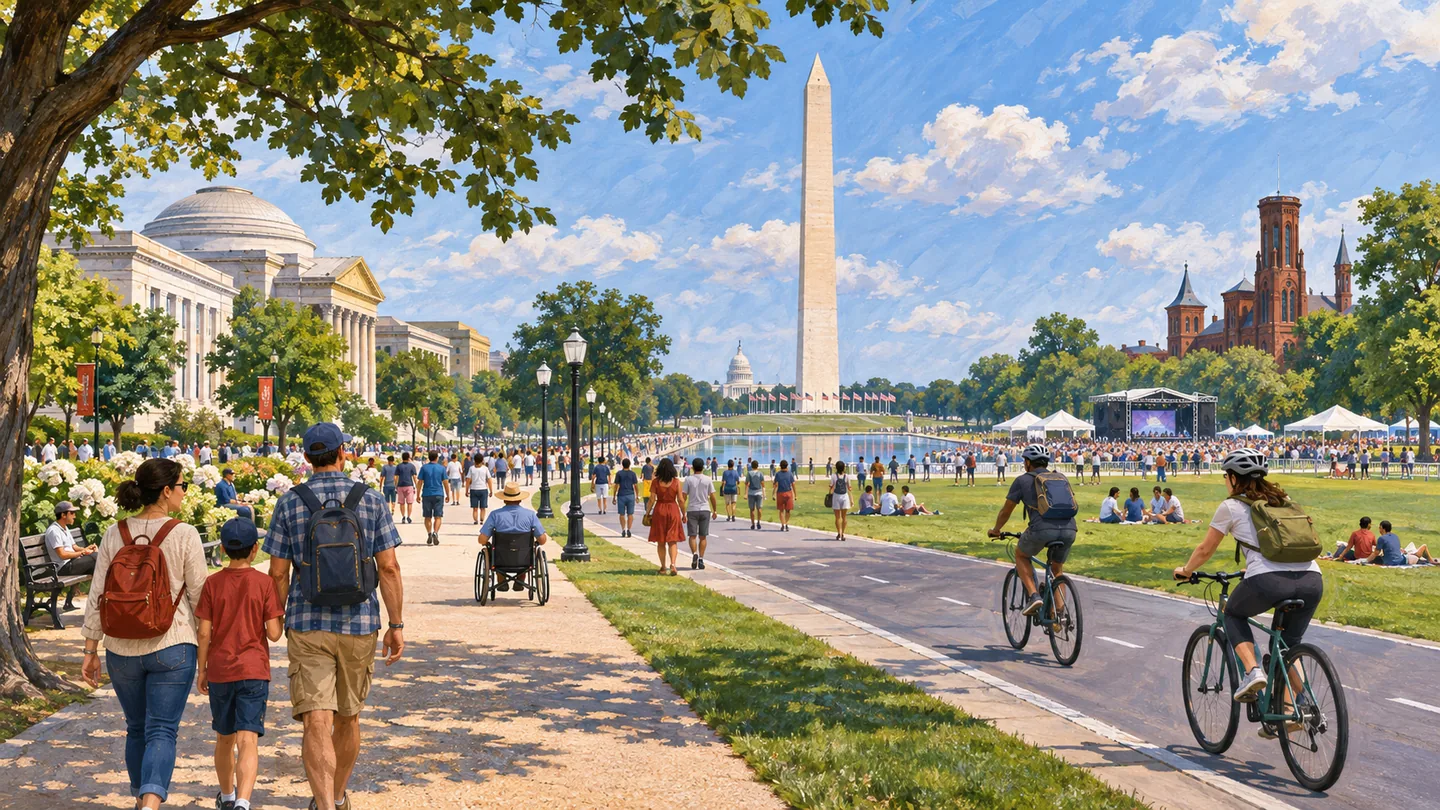
The Mall changes across long lawns, memorial landscapes, museum frontages, Tidal Basin routes, federal plazas and event spaces. Morning exercise, museum crowds, demonstrations, ceremonies and evening memorial visits create different conditions. Distances between landmarks are substantial even when sightlines make them appear close. Shade, weather, restrooms, security and temporary fencing affect a day. Coverage should organize visits around one or two anchors rather than present the area as a single compact attraction.
This is not a residential housing market, and the page should not offer school-assignment or property-selection guidance as if it were a neighborhood. Its property context is public stewardship: federal parkland, museums, monuments, streets and government facilities with different jurisdictions. Development or restoration stories must identify the owner, approval, preservation review, funding and current stage. Nearby residential areas such as Southwest, Capitol Hill or Penn Quarter require their own canonical pages and address-level civic resources.
No single Metro station is best for the entire Mall. Smithsonian, Federal Triangle, Archives, L'Enfant Plaza, Foggy Bottom, Metro Center, Capitol South and other stations may serve different anchors. Walking distances, station closures, event perimeters and museum entrances matter. Parking is limited and often affected by road restrictions. Bicycles, buses and accessible routes require current maps. A practical guide should begin with the exact entrance and finish with the departure plan.
NPS maps and notices should govern park access, closures, permits, restrooms and site rules. Museums and federal institutions publish their own hours, timed-pass, screening, bag, accessibility and closure information. Large events may add temporary fencing, road closures or restricted areas. Heat, storms and limited indoor refuge can change a plan. The page should carry a prominent current-conditions check and avoid freezing volatile hours or security instructions into evergreen copy.
The area supports museums, federal institutions, event production, tourism, transportation, hospitality, food service and nearby restaurants or hotels, but commercial access on federal land is regulated. A business near the Mall cannot imply federal or Smithsonian affiliation. Coverage can explain licensed tours, meetings, museum services and event logistics while separating a public permit, procurement opportunity, concession, sponsorship and ordinary nearby business. Official acquisition and permit records must support any GovCon or vendor claim.
SCHOOLS + STUDENT LIFE
A neighborhood name does not prove a school assignment, voting district, ward, precinct, tax parcel or service boundary. Use the exact address in the current official lookup and confirm unusual cases with the responsible agency.
The school system and enrolled school make individual assignment, enrollment, transfer and athletic-eligibility decisions.
CIVIC + EVERYDAY SERVICES
Ward, ANC, school boundary and public-space questions can follow different maps. Check the exact address and current school year before making a household decision.
Jurisdiction resources checked 2026-11-10. Recheck changing boundaries, officeholders, meeting dates and registration inventory at the official source.
USE THIS AREA WELL
Start with one exact destination and its operator. A Smithsonian museum visit, Lincoln Memorial walk, Capitol event and permitted demonstration have different entrances, security, transit and closure sources. Build the route from the appropriate station or bus stop, allow for the actual distance between anchors and check weather, accessibility, restrooms and return transportation. Do not describe the National Mall as a neighborhood or apply NPS rules to every federal institution. For news coverage, identify whether the item concerns park operations, a museum, a federal project, District transportation or a permitted event. For business coverage, distinguish nearby commercial services from federal concessions, permits and procurement. The guide's value is agency clarity and complete-trip planning, not an undifferentiated list of monuments.
BEFORE YOU CHOOSE
ONGOING COVERAGE
OFFICIAL STARTING POINTS
RELATED READING
guide
GUIDE
Give a few memorials your full attention and treat the distance between them as part of the visit.
 guide
GUIDE
Follow a focused National Mall museum route, with specific galleries to explore, an aviation alternative and a shorter plan for a half day.