 guide
GUIDE
Navy Yard, Capitol Riverfront, The Wharf and Southwest Waterfront
Pick the waterfront that fits your day, then plan its arrival, public-space stop and return on its own terms.
CAPITAL REGION · COMMUNITY
The Wharf / Southwest Waterfront page separates a high-activity waterfront destination from the broader Southwest neighborhood of modernist housing, civic spaces, institutions and everyday services. It helps readers evaluate Washington Channel access, M Street connections and residential blocks without treating The Wharf development as all of Southwest DC.
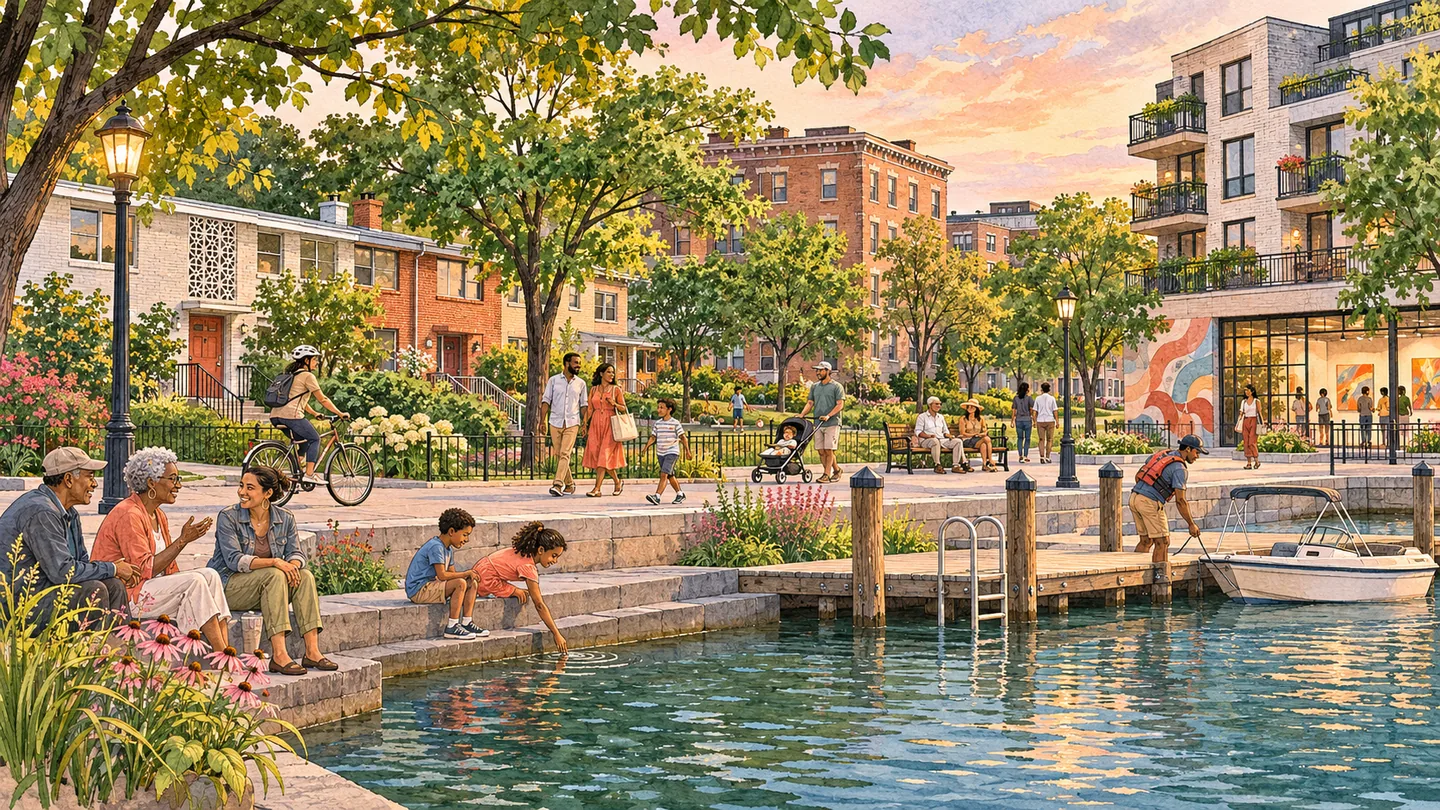
The Wharf / Southwest Waterfront page separates a high-activity waterfront destination from the broader Southwest neighborhood of modernist housing, civic spaces, institutions and everyday services. It helps readers evaluate Washington Channel access, M Street connections and residential blocks without treating The Wharf development as all of Southwest DC.
This is an editorial grouping of The Wharf development and the Southwest Waterfront, not an official neighborhood boundary. The Wharf concentrates restaurants, hotels, entertainment venues, piers and public waterfront space along Washington Channel. The surrounding Southwest neighborhood includes established modernist townhouses, cooperatives and apartment buildings, community facilities, parks and government or institutional uses extending inland toward M Street and beyond. Waterfront, L'Enfant Plaza, Buzzard Point and the Southwest Federal Center are related but distinct place references. Exact-address research is essential for zoning, flood exposure, civic representation, parking and which transit station or daily-service cluster is most practical.
The waterfront can feel like a regional destination, with performances, dining, hotel activity, boating and large event crowds. A few blocks inland, Southwest has a more residential rhythm shaped by mid-century planning, landscaped open space, townhouses, apartment communities and neighborhood institutions. Maine Avenue and M Street organize movement but also divide experiences. Readers should distinguish visitor-facing piers and promenades from quieter residential courts, local parks and the separate office environment farther north.
Southwest offers mid-century townhouses, cooperatives and apartment communities alongside newer waterfront condominiums and rental buildings. Compare ownership structure, association fees, reserves, rental restrictions, parking, loading, accessibility and building systems before comparing views or amenities. Waterfront proximity does not establish a parcel's flood risk, insurance needs or resilience features; use official maps and building records. Construction impacts, public-space agreements and ground-floor commercial activity should also be verified for the exact building and frontage.
Waterfront station on the Green Line anchors the M Street side of the neighborhood, while L'Enfant Plaza may suit some northern or western destinations. Walking, buses, cycling, shuttles and seasonal or scheduled water services expand choices, but each has route, weather and operating constraints. Event nights can change traffic, curb access and garage conditions. Check WMATA alerts, the destination's transportation page and the exact walking route rather than promising a fixed travel time.
Southwest Library, neighborhood parks, waterfront public spaces and cultural venues support both residents and visitors, but hours, reservations and access rules change. Groceries, health services, schools, recreation and government services are distributed beyond the promenade, so daily-life research should extend inland in practice. Confirm school assignment, ANC and ward by address; check flood and storm information by parcel; and review venue, pier, marina, road and transit alerts before visits or events.
Hospitality, dining, live entertainment, hotels, maritime activity, residential services and destination retail drive The Wharf, while the wider Southwest market also includes federal, nonprofit, cultural, professional and neighborhood-serving demand. Customer flows vary sharply between weekday offices, local residents, tourists and ticketed events. A business case should test seasonality, weather, deliveries, employee transit, event calendars, liquor or public-space rules and lease obligations. Being near the water is a positioning advantage, not proof of consistent foot traffic.
SCHOOLS + STUDENT LIFE
A neighborhood name does not prove a school assignment, voting district, ward, precinct, tax parcel or service boundary. Use the exact address in the current official lookup and confirm unusual cases with the responsible agency.
The school system and enrolled school make individual assignment, enrollment, transfer and athletic-eligibility decisions.
CIVIC + EVERYDAY SERVICES
Ward, ANC, school boundary and public-space questions can follow different maps. Check the exact address and current school year before making a household decision.
Jurisdiction resources checked 2026-11-10. Recheck changing boundaries, officeholders, meeting dates and registration inventory at the official source.
USE THIS AREA WELL
Use this page first to separate destination needs from neighborhood needs. If the priority is a performance, restaurant, hotel, pier or waterfront gathering, start with The Wharf's official map, access instructions and event status. If the priority is housing or daily life, compare the established Southwest blocks around M Street, local parks and community facilities with newer waterfront buildings. Test the exact walk to Waterfront or L'Enfant Plaza, because station usefulness changes across the area and during large events. For a property, review ownership structure, fees, reserves, parking, loading, flood information, building systems and any active construction nearby. For a business, model resident, office, tourist and ticketed-event audiences separately, then verify delivery access and seasonal demand. Do not use “The Wharf,” “Southwest Waterfront” and “Southwest DC” as interchangeable boundaries. Confirm school assignment, ANC, ward, zoning and permits by address. Finally, check current transit, venue, marina and weather notices before making plans that depend on a specific service or public space.
BEFORE YOU CHOOSE
ONGOING COVERAGE
OFFICIAL STARTING POINTS
RELATED READING
guide
GUIDE
Pick the waterfront that fits your day, then plan its arrival, public-space stop and return on its own terms.
 guide
GUIDE
Give a few memorials your full attention and treat the distance between them as part of the visit.